
A Practical Comparison of Siding Materials for Ohio Homeowners
Replacing your home’s siding is a major investment, and choosing the wrong material can mean living with problems for decades. The siding that works well on a home in Arizona won’t necessarily hold up in Warren County, where we deal with freeze-thaw cycles, humidity, UV exposure, and severe storms — sometimes all in the same week.
After years of installing siding on homes across Lebanon, Mason, West Chester, Springboro, and the surrounding area, we’ve seen firsthand how different materials perform in Ohio’s demanding climate. This guide breaks down the most popular siding options so you can make an informed decision for your home.
Vinyl Siding: The Most Popular Choice for a Reason
Vinyl siding dominates the residential siding market in Ohio, and it’s not hard to see why. It’s affordable, low-maintenance, and available in a huge range of colors and styles. Modern vinyl siding has come a long way from the thin, wavy panels of decades past.
Advantages
Cost-effective: Vinyl is typically the most affordable siding option per square foot, including both materials and installation. For homeowners on a budget, vinyl offers the best bang for the buck.
Low maintenance: Vinyl doesn’t need painting, staining, or sealing. It resists rot and insect damage. Cleaning usually requires nothing more than a garden hose or occasional pressure washing.
Color variety: Today’s vinyl siding comes in dozens of colors and multiple profiles, including traditional clapboard, Dutch lap, board and batten, and shake styles. Many premium lines include realistic wood-grain textures.
Durability in Ohio’s climate: Quality vinyl siding handles freeze-thaw cycles well because the material flexes slightly rather than cracking. It doesn’t absorb moisture, so it won’t rot or swell.
Considerations
UV sensitivity: Darker vinyl colors can fade over time under Ohio’s summer sun. Choosing lighter colors or products with UV-resistant formulations helps, but some fading over 15 to 20 years is normal.
Impact resistance: Vinyl can crack on impact, especially in very cold weather when the material becomes more rigid. Hailstorms and errant baseballs are vinyl’s biggest enemies. Some manufacturers offer impact-resistant lines that perform better.
Not paintable: While vinyl comes in many colors, you can’t easily change the color later. Some homeowners paint vinyl siding, but the results can be inconsistent and the paint may not adhere long-term.
Best for
Homeowners who want an attractive, low-maintenance exterior at a reasonable price point. Vinyl is an excellent choice for most homes in the Lebanon and Mason area.
Fiber Cement Siding: The Premium Performance Option
Fiber cement siding — with James Hardie being the most recognized brand — is made from a mixture of cement, sand, and cellulose fibers. It’s become the material of choice for homeowners who want the look of natural wood without the maintenance headaches.
Advantages
Exceptional durability: Fiber cement doesn’t rot, warp, or suffer insect damage. It’s non-combustible, which provides a fire-resistance advantage over both vinyl and wood. It handles Ohio’s freeze-thaw cycles without cracking or deteriorating.
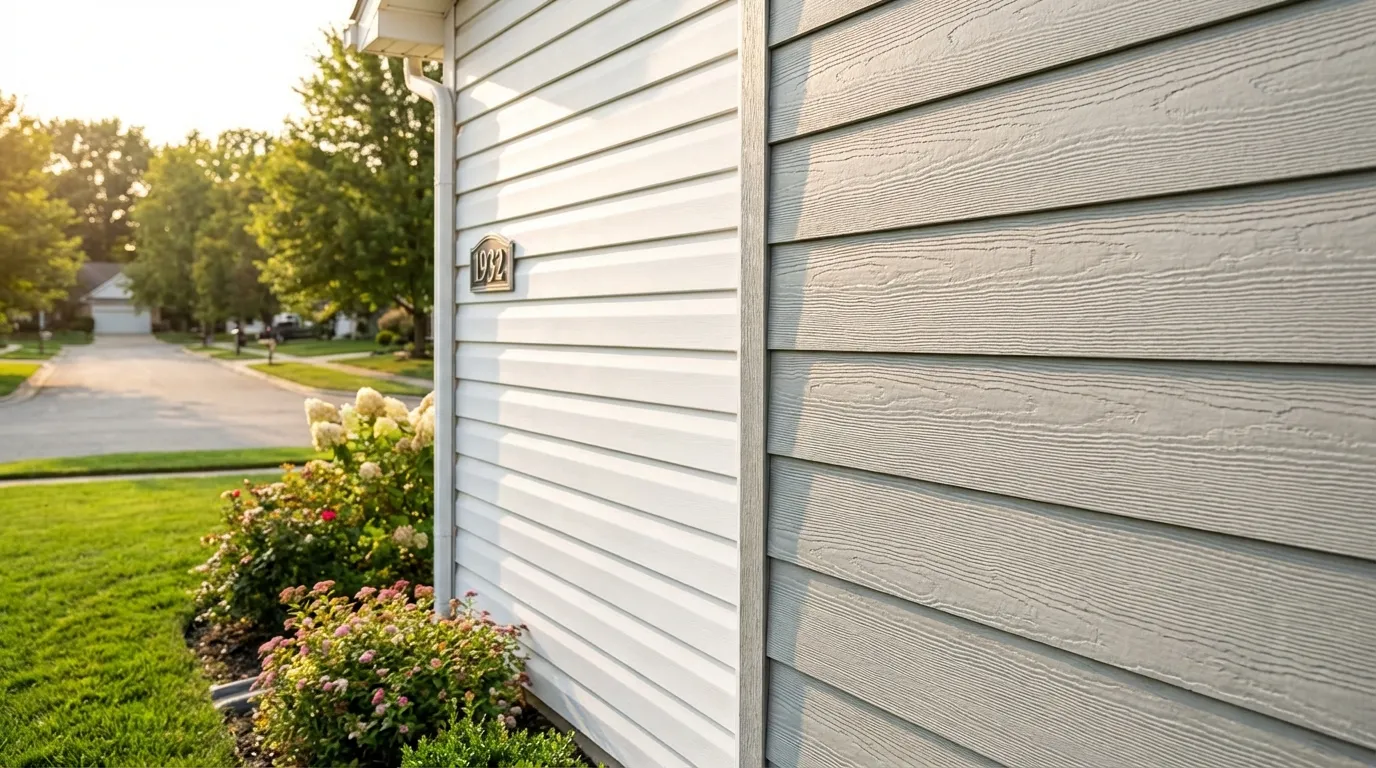
Authentic appearance: Fiber cement can be manufactured to closely replicate the look of real wood clapboard, shingles, or board and batten. The texture, shadow lines, and depth are significantly more realistic than vinyl.
Paintable: Fiber cement comes either pre-painted from the factory or ready to paint on-site. You can change the color whenever you want by repainting, which gives you flexibility over the decades.
Excellent weather resistance: Fiber cement stands up to Warren County’s climate extremely well. It doesn’t expand and contract as much as vinyl with temperature changes, it resists moisture penetration, and it holds up to hail better than vinyl.
Home value: Fiber cement siding is consistently associated with higher home values and stronger return on investment. Buyers and appraisers recognize it as a premium material.
Considerations
Higher cost: Fiber cement costs more than vinyl — typically 1.5 to 2 times as much installed. The material itself is pricier, and installation requires specialized tools and skills, which means higher labor costs.
Weight: Fiber cement is heavy. It requires a more robust mounting system and careful handling during installation. This isn’t a DIY project — it requires experienced installers who know the product.
Maintenance: While fiber cement is far less maintenance-intensive than real wood, it’s not zero-maintenance like vinyl. Factory paint finishes last 15 to 20 years before needing repainting, and caulking at joints and transitions needs periodic attention.
Best for
Homeowners who are willing to invest more upfront for superior durability, authentic appearance, and long-term value. Fiber cement is an excellent choice for higher-end homes in neighborhoods where appearance matters and for homeowners who plan to stay in their home for many years.
Engineered Wood Siding: The Middle Ground
Engineered wood siding, such as LP SmartSide, is made from wood strands bonded with resins and treated with zinc borate for rot and insect resistance. It offers a real-wood look with significantly better durability than natural wood.
Advantages
Natural wood appearance: Engineered wood provides a convincing wood look with a real wood texture that vinyl can’t match. It’s paintable and can be finished in any color.
Good durability: The manufacturing process and protective treatments give engineered wood much better resistance to moisture, rot, and insects compared to natural wood siding. It handles Ohio’s climate reasonably well.
Moderate cost: Engineered wood typically falls between vinyl and fiber cement in price, making it an attractive middle-ground option.
Impact resistance: Engineered wood is more impact-resistant than vinyl, which matters in areas prone to hailstorms.
Considerations
Moisture sensitivity: While engineered wood is treated to resist moisture, it’s still a wood-based product. Proper installation with adequate clearance from the ground and correct caulking is essential. In Ohio’s humid climate, any installation shortcuts can lead to moisture problems.
Painting required: Engineered wood must be painted or stained and will need repainting every 8 to 12 years. This ongoing maintenance cost should be factored into the long-term value equation.
Warranty conditions: Some engineered wood warranties have specific installation and maintenance requirements. Failure to maintain the paint finish, for example, can void the warranty.
Best for
Homeowners who want a more natural wood appearance than vinyl provides but aren’t ready for the premium cost of fiber cement. It’s a good fit for homes with a craftsman or traditional aesthetic.
What About Natural Wood Siding?
We occasionally get asked about natural cedar or redwood siding. While these materials are beautiful, they require significantly more maintenance in Ohio’s climate — regular painting or staining every 3 to 5 years, ongoing inspection for rot and insect damage, and careful attention to moisture management. For most homeowners in the Lebanon and Mason area, one of the three options above will provide better long-term performance with less hassle and lower lifecycle costs.
How to Decide: Key Questions
When choosing siding for your Warren County home, consider these factors:
- What’s your budget? Vinyl is the most affordable. Fiber cement is the most expensive. Engineered wood falls in between.
- How long do you plan to stay? If you’re in the home for the long haul, investing in fiber cement makes more financial sense. If you’re planning to sell in five years, vinyl provides the quickest return.
- How much maintenance are you willing to do? Vinyl requires the least. Fiber cement and engineered wood both need periodic painting.
- What does your neighborhood look like? Matching the quality and style of surrounding homes helps maintain property values.
- Do you have specific aesthetic goals? If you want the look of real wood, fiber cement or engineered wood deliver. If you’re focused on clean, consistent color and low fuss, vinyl excels.
Get a Professional Opinion
The best way to choose the right siding for your home is to get an honest assessment from someone who installs all three options and can speak from experience about how they perform locally. At Pallotta Exteriors, we install vinyl, fiber cement, and engineered wood siding across Warren County. We’ll walk you through your options, explain the tradeoffs, and help you make the choice that best fits your home, your budget, and your goals.
Contact us for a free siding consultation — we’ll come to your home, evaluate your current siding, and give you a straightforward recommendation.